
candlenut uses in cooking are receiving renewed attention as international consumers and food businesses explore traditional ingredients from Southeast Asia. The background to this trend is connected to growing interest in regional cuisines, natural ingredients, and traditional cooking practices. Candlenut, known scientifically as Aleurites moluccanus, has long been used in Indonesian, Malaysian, Pacific Island, and other Southeast Asian culinary traditions. Today, its distinctive role as a flavoring and thickening ingredient is attracting interest beyond its traditional markets.
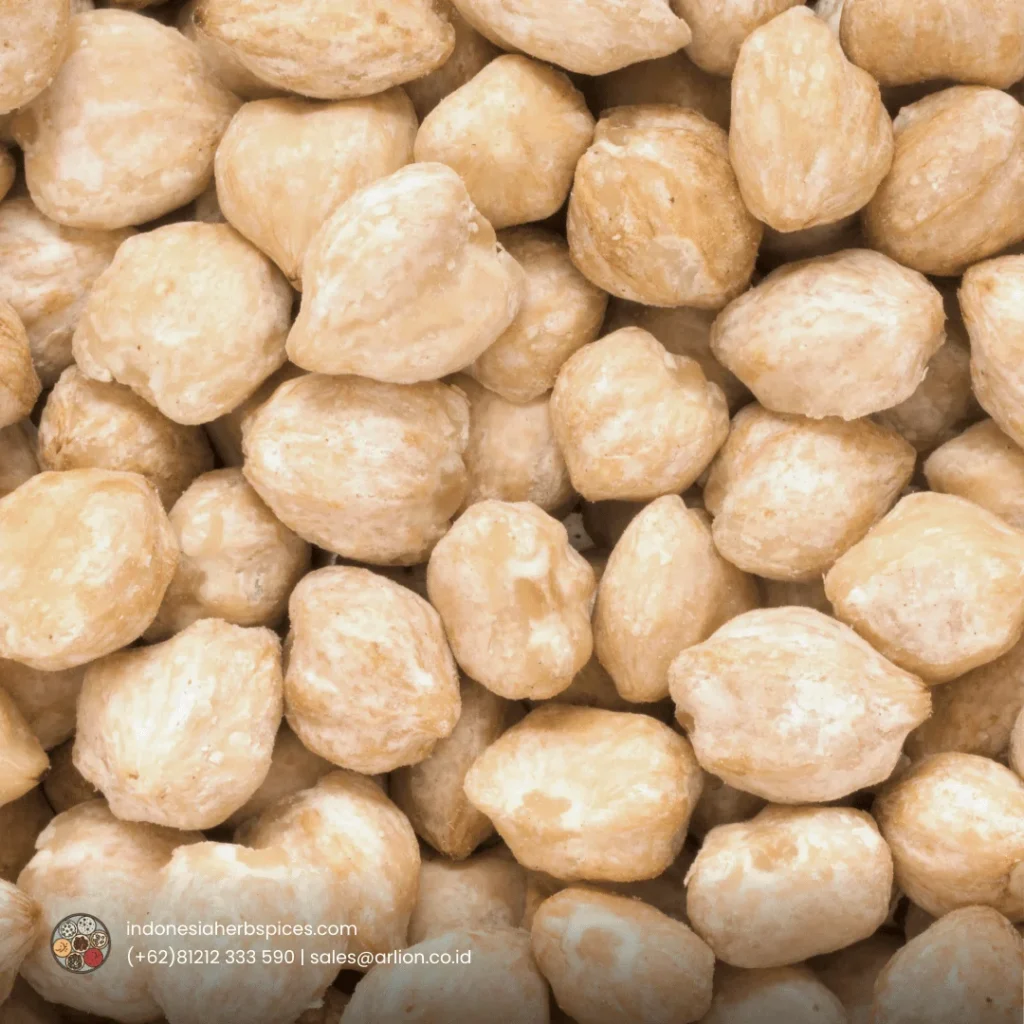
Candlenut in Traditional Cuisine
Candlenut is a large, oily seed commonly used in several Indonesian dishes. The nut has a relatively mild flavor when raw but develops a richer and more aromatic character after proper preparation and cooking.
Unlike some culinary nuts that are mainly eaten as snacks, candlenut is often incorporated into spice pastes and sauces. Its high oil content gives dishes a creamy texture and helps create a smooth consistency.
In Indonesian cuisine, it is particularly associated with traditional spice mixtures. It can be ground together with ingredients such as shallots, garlic, chili, turmeric, ginger, galangal, and other spices.
A Natural Thickening Ingredient
One of the most important candlenut uses in cooking is its role as a natural thickener. When ground, the oily seed can help create a richer texture in sauces and spice pastes.
This characteristic makes it useful in dishes where a smooth and substantial sauce is desired. The ingredient can contribute body without requiring large amounts of flour or other conventional thickeners.
Flavor and Texture
Candlenut does not typically dominate a dish with a strong nutty flavor. Instead, it can provide a subtle richness that supports other spices, candlenut uses in cooking.
Its texture is equally important. Once ground into a paste, it can help bind ingredients together and create a smoother consistency.
This combination of flavor and texture explains why the ingredient has remained relevant in traditional cooking for generations.
Popular Applications in Indonesian Food
Indonesia’s diverse culinary traditions provide numerous examples of how candlenut can be incorporated into food. It is used in various regional spice pastes, sauces, soups, and meat or vegetable preparations.
The ingredient is particularly useful in dishes requiring a thick and aromatic base. It can be combined with coconut milk, chili, herbs, and spices to create complex flavor profiles.
Different regions may use the ingredient in different ways, reflecting the diversity of Indonesian cuisine.
Spice Pastes and Sauces
A common method is to grind candlenut together with other ingredients to form a spice paste. The paste is then sautéed or cooked before being combined with meat, seafood, vegetables, or other ingredients.
Cooking the spice paste helps release aromas from the ingredients while developing a deeper flavor.
The oily nature of the seed also contributes to the consistency of the finished sauce, candlenut uses in cooking.
Soups and Stews
Another example of candlenut uses in cooking can be found in soups and stews. Ground candlenut can help make a broth or sauce appear richer and more substantial.
It may be incorporated into recipes featuring chicken, beef, fish, vegetables, or coconut-based sauces.
The exact quantity varies according to the recipe, regional tradition, and desired consistency.
Importance of Proper Preparation
Although candlenut is a traditional culinary ingredient, proper preparation is essential. Raw candlenuts should not be consumed directly because they contain compounds that can cause gastrointestinal discomfort and other adverse effects.
Cooking or appropriate heat treatment is important before consumption. Traditional recipes generally incorporate the nuts into cooked dishes rather than using them raw.
Consumers purchasing candlenuts should follow the preparation instructions provided by the supplier or recipe.
Cooking Methods
Candlenuts can be roasted, cooked, or incorporated into preparations that undergo sufficient heating. The appropriate method depends on the recipe.
Grinding the nuts before cooking is common when they are intended to become part of a spice paste, candlenut uses in cooking.
Heating can also help develop the ingredient’s aroma and integrate its oils into the surrounding spices.
Food Safety Considerations
Food safety remains important when using traditional ingredients. Candlenuts should be purchased from reputable suppliers and stored under appropriate conditions.
As with other oily seeds and nuts, storage conditions can affect quality. Excessive heat, moisture, or prolonged exposure to air can contribute to deterioration.
Proper packaging and storage can help preserve freshness and reduce the risk of unwanted changes in flavor or aroma.
Growing International Interest
The globalization of food culture is introducing traditional ingredients to new consumers. Indonesian restaurants, specialty food producers, cooking enthusiasts, and international food businesses are contributing to interest in ingredients such as candlenut uses in cooking.
The expansion of Asian cuisine outside its traditional markets has also created opportunities for specialty spice suppliers.
Opportunities for Food Manufacturers
Food manufacturers may use processed candlenut ingredients in spice blends, sauces, ready-to-cook products, and other formulations.
However, manufacturers need to consider food safety, processing requirements, labeling regulations, and supply consistency.
Standardized processing can help ensure that the ingredient has consistent characteristics from one production batch to another.
Export Potential
Indonesia and other producing regions have opportunities to develop higher-value culinary products based on candlenut. Instead of exporting only whole nuts, businesses can explore processed forms such as ground ingredients or ready-to-use spice blends.
Such products may be attractive to international consumers who want convenient access to traditional ingredients.
For export markets, quality control, packaging, traceability, and regulatory compliance are particularly important.
Nutritional and Culinary Characteristics
Candlenuts contain significant amounts of fat, which contributes to their culinary properties. Their oil content is one reason they can create richness and smoothness when incorporated into sauces.
However, their nutritional composition should not be interpreted as a reason to consume raw nuts. The ingredient is primarily used as a cooked culinary component.
The quantity used in traditional recipes is generally determined by the desired texture and flavor rather than as a major nutritional ingredient.
A Distinctive Ingredient for Modern Cooking
Modern chefs are increasingly exploring traditional ingredients to create new interpretations of regional cuisine. Candlenut can provide an opportunity to introduce a distinctive texture and subtle richness to contemporary recipes.
Chefs may experiment with the ingredient in sauces, marinades, spice pastes, and other preparations while maintaining appropriate cooking practices.
Combining Traditional and Modern Techniques
The growing interest in Southeast Asian cuisine has encouraged chefs to combine traditional ingredients with modern cooking methods.
Candlenut can fit into this trend because its functional characteristics extend beyond flavor. Its ability to contribute texture makes it useful in recipes where consistency is important.
Nevertheless, chefs should preserve proper food-safety practices when adapting traditional ingredients to modern menus.
Market Outlook
The market for traditional culinary ingredients is expected to remain relevant as consumers seek authentic flavors and greater culinary diversity.
The growing popularity of Indonesian cuisine could provide additional opportunities for candlenut suppliers and food manufacturers.
For businesses, consistent quality and reliable sourcing will be essential. Buyers increasingly expect information about product origin, processing, packaging, and food safety.
What Buyers Should Consider
Businesses purchasing candlenuts should evaluate freshness, cleanliness, size, packaging, and processing status.
The intended application should also be considered. Restaurants may require whole nuts for traditional recipes, while manufacturers may prefer processed or ground forms.
Reliable suppliers should be able to provide appropriate product information and handling recommendations.
Conclusion
The growing interest in candlenut uses in cooking reflects the wider international appreciation of traditional Southeast Asian ingredients. Candlenut plays an important culinary role by adding richness, texture, and body to spice pastes, sauces, soups, and other dishes.
Its value comes not only from flavor but also from its functional properties. However, proper cooking and food-safety practices are essential because raw candlenuts should not be consumed directly.
As Indonesian cuisine continues to gain international recognition, candlenut has the potential to become increasingly familiar to global consumers and food manufacturers, candlenut uses in cooking. With responsible sourcing, proper processing, and suitable preparation, this traditional ingredient can continue to play an important role in both traditional and modern culinary applications.
Further Information
For more information candlenut uses in cooking, please contact WhatsApp (+62) 812-1233-3590 or email sales@arlion.co.id.
WhatsApp: +62 812-1233-3590 or .
